Archive for the ‘Authors’ Category

Sea Level Rise and how to manage coastal land already developed


In the late 1990’s I recognised that climate change was a real threat to our coastal environs. With wilder weather events predicted under climate change our coastal dunes were vulnerable. Our settlements and streets were also vulnerable to these wilder storms. Now with the reality of sea level rise caused by the ocean’s expansion and the melting of kilometers thick ice on the polar land masses, Australians living on the coast need to be concerned how government is going to plan for our future with regard to land management and risk mitigation related to property values and our wealth accumulated in these coastal properties. This paper discusses these issues.

By David Holland


Short cut to Paper: Planning for Climate Change in the Coastal Regions of New South Wales

Habitat Association's avatarHabitat Town Planning Forum


Newcastle forshore

By David Holland

The Risk Model, as described in the following paper,  is an approach for local councils in NSW to plan for future climate change induced sea level rise in an equitable and proactive way.

It allows local government to approve developments that are under the maximum State Government of NSW benchmarks set at 900mm over the present flood levels while at the same time reduces risks to litigation due to damage of properties from climate change brought by property owners who’s developments are below this maximum standard set by the State Government. (Often a maximum standard set by State Governments become a minimum standard for local government due to the threat of litigation by land owners.)

This standard has become an enormous problem to land owners in at risk locations along the coast of New South Wales. In recent times insurance policy premiums have skyrocketed. Land…

View original post 380 more words
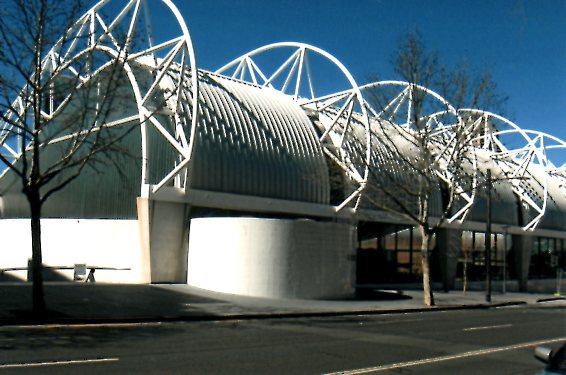
Visions of Inner Sydney New Series

Pearl Shell Roof Darling Harbour

The Weekly Dozen is a grouping of 12 photos to be presented on the Visions of Sydney Habitat Association’s project site each week.

This is the first week of this new series called “Buildings and Spaces”.

Also last week Visions of Sydney had a new pilot of this series called Autumn in Inner Sydney.

Both these new series can be found on Visions of Inner Sydney.

Link to site: Buildings and Spaces

Transport for NSW Long Term Master Plan – Submission on Discussion Paper

As an advocate for both adaptive thinking and the Environment the Habitat Association for Arts and Environment has included the latest publication by one of its members, David Holland, on transport planning for New South Wales.

For those who are surfing the web from outside of Australia, New South Wales is arguably the most populous State in Australia and has a large economy in Australian terms.

This means that transport planning in New South Wales (NSW) is pivotal to the future success of that economy and the we being of the residents and workers of the State.

We may even go as far as to say that without a solid strategy for the future and new co-operation between the various transport agencies, NSW is poised to produce more transport bottleneck which will affect the states future prosperity. The submission outline three themes that Mr. Holland feels are important for the way forward. They are sustainability, security and reliability.

The submission not only looks at very practical aspects of providing a sustainable public transport system, but also sustainable ways to operate transport systems into the future. This is highlighted in the approach related to handling freight. The submission proposes a logical but revolutional way to handle freight service between regions and between other Australian States.

The use of renewable energy in the rail system is touched on as a way for the State to meet renewable energy targets.

The Central Coast of NSW is referred to in much of the submission. David believes that regional Australia is often left out of detailed transport planning processes because of the assumption that all commuting, as has been traditionally the case, is flowing to and from the Sydney metropolitan areas. With the slow but steady improvement of job opportunities in the regions, more and more commuting is being done intra-regionally. This means that public transport services should not only accommodate this trend but transport planning should drive this trend, providing appropriate infrastructure to give greater opportunity for regional investment in the growing regional economic powerhouses of the Illawarra, the Central Coast, the far west of Sydney around Penrith and the Blue Mountains, and the south west of Sydney around Campbelltown.

To Read More follow this link>: