Contemporary Artist and Jewellery Making

The Habitat association would like to introduce Nadia Zarb.

Nadia Zarb is an artist of contemporary fine art and specialises in jewellery making.

Based in Buff Point of the New South Wales Central Coast she is running a series of workshops involving the making of jewellery.

A sample of her art:

Light Rays

Turning Pink unframed

Focus

She can be contacted at nadia2303@hotmail.com

Her web page is at:

www.nadiazarb.com.au


Influencing the Australian Federal Government on Renewable Energy Policy

English: Greenchoice is a renewable-energy sup...

By David Holland

During the year 2006 the local federal member for Dobell NSW sent a letter to his constituents asking them to write to him outlining any issues that concern them.  Not to be deterred by never taking up such an opportunity before, I wrote back to the member detailing some of my concerns regarding the direction of policy, than currently being followed by the Howard government, and outlined some of the opportunities useful for Australia to follow in efforts to reduce carbon dioxide emission and create a more sustainable way to produce energy for domestic, industrial and automotive uses within Australia.

The member was a liberal party MP and impressed enough with the letter to pass it on to the then Minster for the Environment, however no letter was forthcoming from that the Minister in reply to the local member.

Not to be deterred in those troublesome times of ‘Work Choices’, a policy by the Howard government to reorganize the Australian workforce, a policy that was soon to topple that government, I wrote to the shadow minister for the environment, the Hon. Peter Garret, who responded to my letter.

Then on the eve of the 2007 election, a repackaged letter adding a considerable amount of new information was sent directly to the opposition leader, who was soon to sweep into power as the Prime Minister, The Hon. Kevin Rudd.

Due to the amount of work this new Labor PM was about to do, I was not expecting any response in the near future, however I was confident that this letter was at least read, if not influential on the new government’s policy direction.

During the next 12 months from November 2007, I noticed that policy was set in the right direction for renewable energy to become a major player in Australian Energy production, but somehow real on the ground actions and expenditures were not supporting the policy move towards renewable energy. The global financial crisis had caused a lot of money that I had hoped to be used to support the move to cleaner energy, to be spent on a range of other projects. Some quite important infrastructure projects, and other projects related to energy consumption that would have limited value in the long-term towards any real change to Australia’s mix of energy sources.

As a result, in 2009, I sent another, completely new letter to Prime Minister Rudd, encouraging action towards real change to Australia’s energy mix, this time high lighting transport applications for sustainable fuels and modifications to infrastructure to support change.

After the change to the Prime Minister ship in 2009, I resolved to refocus my effort by giving a full and detailed update on all the letters sent the government, and outline the level of achievement Australia had made up until 2010 as a way of demonstrating, the change already underway caused by the government’s policy settings.

The articles are referenced below:

Following these two articles being sent to Prime Minister Gillard, I received two letters from the government. The first was from the office of Prime Minister Gillard, the detail of which is available on the following link.

The second letter was from the Department of Resources, Energy and Tourism. The article below was written around the contents of the letter from the Department, which outlines the direction of the actions expected by the Gillard government in the near future to encourage the implementation of renewable energy uptake within the Australian industry.

Reply Letter from the Office of the Hon. Martin Ferguson AM MP, Minister for Resources and Energy 20 Jul 2011

Following is a researched explanation of the above letter.

Read More ….

New Centre for the Habitat Association, The Habitat Centre for Renewable Energy

The Habitat Association is proud to announce the coming online of “The Habitat Centre for Renewable Energy”.

With the large amount of interest in this subject under our Gallery2020 Publishing blog site we have decided to open our Centre for Renewable Energy to be used as a central location for discussion about developments in renewable technology.

It is a site that the Habitat Association has dedicated for Habitat Association for Arts and Environment members to contribute articles containing interesting facts, developments and new technologies to the world.

Click here to access this new blog site.

Submission for the North Wyong Structure Plan NSW Australia

The North Wyong Structure Plan is one of the most important documents compiled for the Central Coast. It identifies the pattern or template for development in the fastest growing areas of the Central Coast, the areas north of the township of Wyong.

The plan has been produced from the objectives of the Central Coast Strategy 2008, which is the main future looking document for the whole Central Coast.

The relationship of this plan to the Draft Central Coast Regional Transport Strategy (CCRTS)

Recently, the Central Coast has had the opportunity to be presented with the Central Coast Regional Transport Strategy.  This document although still in draft, in our opinion, was not able to satisfactorily identify the future transport needs of the Central Coast. By not using demographic trend data to show the huge needs in transport for the future of the Central Coast it was not able to properly analyze future transport trends and plan projects that relate to these trends. As this plan relies on the CCRTS for transport planning into the future we feel that the transport component of this plan is inadequate.

This document however, while only touching on transport has been able to show the capacity that the Central Coast will be able to contribute to NSW and the growth potential of the area covered by the North Wyong Structure Plan.

Trend from Private to Public Transport

The Plan outlines a potential of up to 10,000 new jobs with the release of developable land over the scope of the Plan. With this increase in employment opportunities there will be an increasing burden on transport infrastructure to move commuters. To increase efficiencies and reduce carbon emissions the Plan should move with the trend away from private forms of transport to public transport. This planned trend will help avoid cost blowouts on roads funding and time wasted by commuters waiting on congested roads.

It is expected that a large proportion of the jobs will be filled by workers from the southern parts of the Central Coast and Newcastle. It would be ideal that everyone living in the region would be able to walk or ride to work, but this would not be practical considering individual life style choices. However, workers will examine the feasibility of how to get to a particular job. This is where transport plans and transport planning must use a forward planning model to help enable large parts of the work force to easily access public transport.

The CCRTS, of which the Plan relies as a blue print to achieve sustainable transport is lacking in vision.  The Plan lacks a vision for transition from the medium term planning to the long term planning. The Plan, for example, relies on the CCRTS to supply the needed road infrastructure for the massive amounts of movement that is planned within the Plan.  This movement must be planned so that workers leave their cars at home and travel by public transport to work, either locally or from the regions. Bus services must become a seamless option for commuters.

<Read More Issues covered in this submission>

The Habitat Association’s Poet’s Corner

The Habitat Association is proud to announce a new section for the appreciation arts. The Habitat Association’ Poet’s Corner.

The inaugural contributor to this new section is one of the Habitat Association’s founding members, Dr. Ray Rauscher. Ray has been writing this form of literature for many years. He is a keen observer of life and social interaction and as you read his poetic prose you will begin to see the depth of thought behind the words displayed by this man.

Ray has a great many of these works, however at present the Association has only post a few. Over time we will be publishing many more of his work. Ray is a believer of work economy. If one word will say it why use two.

Ray has asked us to leave his personal email on the index page so you can email him direct if you particularly like any of his poems. To an author your positive comments are alway appreciated.

The Habitat association is thankful to have Dr. Ray’s work on our site. We are now on the lookout for other talented poets, young or old to join the Habitat Association and contribute to our newest site.

<Click on the link to view the new site>

Central Coast – NSW – a Regional Growth Area

Proposal to establish a ‘regional growth area’, including governance and planning structures, for the Central Coast – covering Gosford City and Wyong Shire.

Sustainable Communities Research (SCR) has recently been working on aspects of the growth centre of Warnervale / Wadalba as well as greenfield and renewal growth areas in Wyong Shire and Gosford City. The paper addresses key issues and major questions of strategic planning and infrastructure financing of these areas. Of priority importance for the Central Coast are water planning, population management and infrastructure provisions.

From this work SCR makes three recommendations for consideration, including: extending the area of responsibility of the CCRDC to the Warnervale / Wadalba growth centre; designating Wyong Shire as a Local Government Growth Area; and, designating the whole of the Central Coast as a Regional Growth Area.  The report also suggests five Central Coast plans need to complement the Central Coast Regional Strategy (CCRS) (2008). These plans as noted below are: infrastructure; sustainable transport; conservation; water management; and affordable housing.

Report Recommendations:

A. Growth Areas

We recommend that the State government designate the whole of the Central Coast (Gosford / Wyong) as a Regional Growth Area.

We make three suggestions (containing options) about growth areas for the State government to consider:

1.      State government extending the area of responsibility of the CC Regional Development Corporation (CCRDC) to the Warnervale / Wadalba growth centre;

2.       State government designating Wyong Shire as a ‘Local Government Growth Area’;

3.      State government designating the whole of the Central Coast (Gosford / Wyong) as a Regional Growth Area (preferred option).

B. Planning

We recommend that five plans complement the Central Coast Regional Strategy:

1.      CC Infrastructure Plan – with commitments to delivering needed infrastructure to meet population growth.

2.      CC Sustainable Transport Plan – follow-up actions under the CC Regional Transport Plan (2010) linking the existing major population centres and integrating public transport (rail/buses), roads, cycleways and walkways.

3.      CC Conservation Plan – the yet to be completed plan to conserve the local environment and address degradation from past development (especially the lakes and valleys)

4.      CC Water Management Plan – linking the three above to this plan under the newly formed CC Water Corporation.

5.      CC Affordable Housing Plan – to ensure many local people on lower incomes can afford to live on the Central Coast.

A report presented to:

Hon Bernie O’Farrell, Premiere of NSW, Australia on Wed 21st Sept 2011

by:                             Sustainable Communities Research

Compiled: Wed 24th August 2011

In association with

Habitat Association for Arts and Environment

www.habitatassociation.com.au

Authors            –       Kevin Armstrong and Dr. Ray Rauscher

To read the full report: <click here>


BANGLADESH with faith and tears by Margret Ellem

A heart warning story by Margret Ellem of her early life as a missionary. This is a must read. The Habitat Association.

It starts off this way:-

——————————————————————————

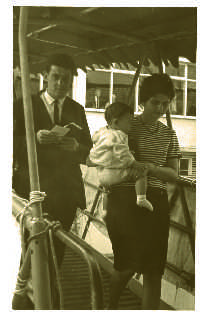
Margret and Roger departing the boat

Growing up I was a bit of a “wild child”, until fifteen years old when I met my first love David! Up to this stage I hadn’t attended church (only Sunday School spasmodically). When the handsome minister’s son invited me to Dee Why Baptist Church I gladly went! (I would have gone anywhere he asked!) I recognized God’s claim on my life and about three months later committed my life to God and was baptized. New beginnings! After four years of keeping company with David, and frequently being jealous of the many girls who were attracted to him – I had to let him go, for him to discover what it was like to date other girls! I was his first girlfriend, however I had gone out with other boys. At nineteen I was devastated and I can remember sitting in vain by the phone crying, waiting in vain for him to call. I found it extremely hard to let him go because I truly loved him and had hoped for a future with him. I still find I have a problem in this area with people I love.

Around this time , along came Roger Ellem (a student Pastor at Narraweena, a local Baptist church). He was good looking, and very committed to going to Bangladesh (then East Pakistan) as a missionary. I was attracted to him, and my mother heaved a sigh of relief when I stopped sitting by the phone crying! My parents liked Roger, in spite of the fact that after our first date he told them that if I ended up with him I would be living in faraway East Pakistan! It was a bit of a shock (to say the least) to hear that their beloved daughter may end up the other side of the world but they accepted it! They wanted me to be happy!

Consequently, after one year doing a Missionary Course at the Baptist Theological College in Eastwood in Sydney, we were married in February 1964. Then followed a series of short ministries in Baptist churches in New South Wales, Armidale in 1964 (a country church with the older ladies all waiting for me to take over ladies meetings etc). I found this very daunting, as a young inexperienced minister’s wife! Times were economically tough!

<read more>

New Office for Habitat Association

We are up and running. Our new office in Warnervale on the Central Coast of New South Wales Australia has taken a while to set up, but now we have a home.We are situated in the Old Warnervale Public School site along with the Air League.

As part of our activities to help the arts, we have also helped four artisans to set up studios in two of the older class rooms on the site.These artisans product fine art, crafts and lead lighting.

Warnervale today is a quiet leafy location on a quiet road, however both the State government and the Local council have committee to building a new town from scratch only 1 kilometer to the north. The name of this new town is to be Warnervale and will have a new railway station, shopping centre, library and other civic buildings.

Our location will in time be central to the activities of this new town but for now it is close to the present quiet railway station of Warnervale and a quaint homestead style cafe shop.

Now with an office we are hoping to have more volunteers to help us with the work of supporting the arts and mentoring authors.

Submission to Transport NSW on: Draft Central Coast Transport Strategy 2010

This submission on the draft Central Coast Transport Strategy(herein referred to as the dCCTS or the Strategy) is laid out under the following headings:

  1. Structure of the dCCTS
  2. Issues, Concerns and Questions
  3. Connections between Statistical Data and Works
  4. A Complete Strategy for the Central Coast
  5. A Proposed Structure for the Strategy

1.0 Structure of the dCCTS

The dCCTS is divided into three time frames.

  1. Current to 2012
  2. Medium term 2012 to 2020
  3. Long Term 2020 to 2036

Each timeframe addresses: Rail, Road, Buses, Bicycles, Walking, Freight, Transport Interchanges, Car Parking and Governance.

The dCCTS lists projects in order of:

1. Recently completed or soon to be commenced;

2. Long term.

There is some reader confusion between these two project categories. For example, the $300 million roads funding is noted as a future project, though these funds are mostly already expended on the nominated projects. Also, the new bus routes as announced by the State were finalised with the commencement of new schedules on 8 Nov 2010.

2.0 Issues, Concerns and Questions

There are a number of issues, concerns and questions that must be raised.

2.1  Central Coast Bus Review

I see the dCCTS as needing to compliment the recent Central Coast Bus Review (under the Outer Metropolitan Bus Review) process. I draw attention to the submission on bus transport needs compiled by myself on behalf of the CEN.

Ref. (Bus review Central Coast 2009)

This submission highlighted the bus needs of the North Wyong District. The dCCTS heralds the result of the outer metropolitan bus review, but many of the North Wyong services (i.e. Lakehaven) as requested in the submission have not been incorporated within the new bus timetables (8 Nov 2010). The dCCTS states that a North Wyong Bus Servicing Strategy is to be prepared between 2012 and 2020. This seems to be yet another delay for the North Wyong area to get a comprehensive plan established. (dCCTS ref p32, 47).

Additional issues associated with the new expanded services for North Wyong extolled in the Strategy, are in contradiction to the new timetable which run the last services generally earlier in the evening than the old timetable to certain destinations north of Lakehaven and in particularly on the weekends. Finally, new peak hour services are ending their runs later at Morisset and Wyee stations than from Lakehaven, thus disadvantaging workers returning home from Tuggerah in comparison to these afore-mentioned locations.

2.2 More Services Needed for North Wyong

The claim in the strategy is that more services run past the Wyong Hospital. This is true except on Sundays where there are now fewer services to the hospital and services finish several hours earlier. Saturday services are not much better even though services between Tuggerah and Lakehaven have increased dramatically on Weekends (ref. p. 29 dCCTS).

2.3 Contributions from Key Stakeholders

I express concern in the comment that Transport NSW will allow contributions from key stakeholders when assessing the needs of the community for additional services. Can the State define ‘key stakeholders’ (dCCTS ref. p31)?

2.4 Bus Corridors

No Strategic Bus Corridors were identified in the North Wyong Area. There is a need, however, for these services, as follows (not exhaustive):

  • Lakehaven to Gosford via Bateau Bay
  • Lakehaven to Charlestown via Swansea
  • Lakehaven to Gosford Via Tuggerah
  • Tuggerah to The North Entrance via Mingara

2.5 Metro Bus

The Metro Bus is a Sydney program and would thus need more explanation of its introduction to the Central Coast (ref p31 dCCRTS). The Strategy suggests that it should be expanded to the Central Coast. If Metro Bus is to become the dedicated bus transit ways on the Central Coast, I suggest The Entrance and the Tuggerah transport interchanges should come under any Metro Bus program and other Central Coast interchanges should be investigated (dCCTS ref p32).

2.6 Fast Rail and Freight Services

The strategy mentions long-term planning for a fast rail and plans for a loop rail for freight services though there are no references to any improvements to the current level of access to the rail. The one exception here is, the addition of the Warnervale township station. The fast train and freight loop installations on the Central Coast will take pressure off the existing rail line, thus allowing an expanded system to meet the Central Coast’s growing population (ref p33, 38). CEN has submitted proposals to the State for two new stations, one at Blue Haven and the other at the southern end of the Coast’s rail line west of Woy Woy Station. This will give quicker access to rail for about 20,000 people by the year 2036.

Web Reference:

Planning Public Transport Structures in North Wyong: A Proposal for a Blue Haven Bus and Train Interchange

2.7 Parking Trains

2.8 Local Government Transport Plans

2.8 Minor Towns not Addressed in Strategy

2.9 Secure Bike Parking (Page 14)

2.10 Wyong town Centre (Page 24)

2.11 Commitment to Provide Alternatives to Private Transport in North Wyong (page 24/25)

2.12 Changing Demographic due to Climate Change

2.13 North Wyong Public Transport Links to Newcastle

2.14 Promoting Public transport use

3.0 Connections Between Statistical Data and works

3.1 The dCCTS quotes a range of statistical data.

3.2 What assumptions could be made from the nexus of these facts?

4.0 A Complete Strategy for the Central Coast

5.0 A Proposed Structure for the Strategy

To read detail on the above sub headings and see full document:

<Click Here>

Submission By

David Holland

B.A.S. Environmental Planning

Grad. Dip. Environmental Management

Member of the Sustainable Transport Committee of CEN

Member of the Community Environment Network (CEN)

My son the medieval knight

How can you predict what that little baby boy that you hold in your arms for the first time will do when he grows up?  One would think a boy growing up in seemingly an average environment would turn out to be an average teenager who would grow into an average adult.

As many of us as boys, we would play different games with our siblings, which would include perhaps sword fights with an array of tree branches and sticks. In my case my sister was the one who had to endure a young 10 year old’s exuberance for experimentation with these kinds of implements.

My son, probably fortuitously when playing these kinds of games, only had brothers. He often made good sport of his younger brother as he practiced his techniques as a young lad. Of course, his younger brother, slightly smaller at the time would often fight above his weight, giving a reasonable effort in response to my eldest son’s foray with the sword which in those days was an old stick from behind the shed.

Maybe on reflection there was a clue to be had in the formation of this young man turning himself into a medieval knight.

Read More >>>>>>